

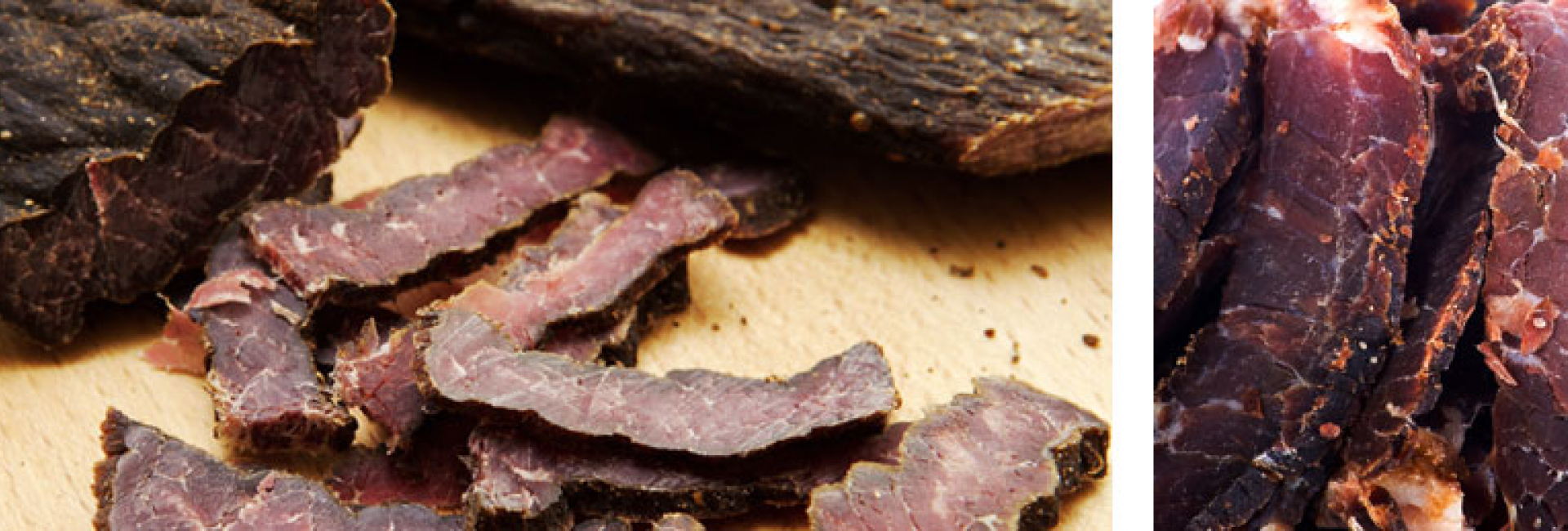
Biltong, along with other great favourites like braaing, koeksisters and potjiekos, is an undeniable part of South Africa’s identity and self-image. The word ‘biltong’ is derived from the Dutch words ‘bil’ which means rump or hind quarter and ‘tong’ which means a strip of meat.
They say necessity is the mother of all invention and this, in a nutshell, explains the ‘why’ of biltong. In the 17th century as the Dutch arrived in Cape Town, they brought with them their process for curing meat, and eighty years later as the Voortrekkers embarked upon their Great Trek to escape British rule in the Cape, this way of preserving meat became their salvation – a durable source of protein and fortitude. That dried meat would evolve to become the biltong we know today – a proud part of our heritage that has steadily spread in popularity to many other countries across the globe.
The ‘how’ of biltong is simpler than you might think – all it requires is the right meat and the right spices. While biltong shops abound, the price can be exorbitant, so why not let N1 with their excellent range of high-quality wholesale meat help you prepare your own biltong. While practically any meat can be transformed into biltong, for the purpose of this exercise we’ll focus on beef. The best cuts to consider are silverside, topside and sirloin. Once you’ve chosen your meat, remove all visible sinew and excess fat; cut your meat into slices (ideally 15cm-20cm in length; and 1cm-2cm in thickness) and make sure to cut along the grain.
Next, assemble the following ingredients – this will be enough for approximately 1kg of meat:
- 60ml Vinegar
- 45ml Worcestershire sauce
- 15ml Sea salt
- 60ml Brown sugar
- 15ml Braai spice
- 125ml Ground coriander
- 15ml Ground black pepper
Place your meat (single layer only) in a large dish and baste thoroughly with the vinegar and Worcestershire sauce. Mix together the salt and spices and press this mixture into the meat, applying repeatedly both sides until the dry mixture is finished. Leave the meat in the fridge to marinade overnight.
The next step is drying and the time it takes depends on personal preference, some say 24 hours for moist biltong; some say between seven and ten days for drier meat – in short, the choice is yours. When hanging your meat it’s best to use a biltong box, you can make your own or shop online for one – Yuppiechef for example sell the Mellerware Biltong King Dehydrator. But if you don’t have one handy there are other, more basic ways of drying your meat – there is even a method using your convection oven. They say to hang the meat strips from the rack, set the oven between 40-70 °C, leave the oven door slightly open so that moisture can escape, and leave the meat to cure for about four hours. Who knew!
Once you have the ‘hang’ of it you can start experimenting with different spices and different drying techniques. It really isn’t as difficult as some make it out to be, so contact N1 today for the best cuts of meat to help you make the best biltong.