

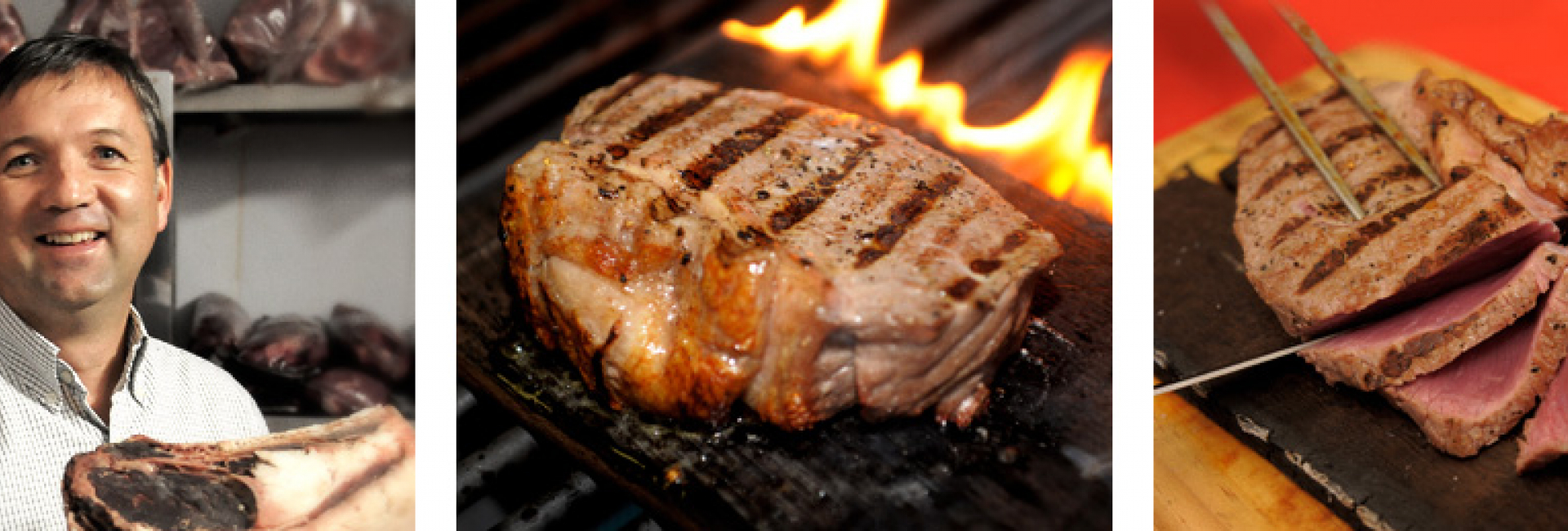
You've chosen your cut, now how do you cook your beef to perfection? We talk to Steve Maresch, co-owner of The Local Grill in Parktown North Johannesburg, and an expert on all things beef, about the different cuts and how best to cook them.
CHUCK
The chuck, a forequarter cut, is often not a popular piece of meat, as it is laced with sinews and can be rather tough. But, if you take the time to cook it well, it can be delicious. The cut needs be cooked slowly at a low temperature so that the fat is rendered down and the result is tender and full of flavour. You can cook your chuck roll for over 12 hours at 90 degrees Celsius after dry curing it, the same method that is used with brisket.
RIBS
The cuts around the rib; the wing rib and rib eye are very versatile. Rib eye is amazing to do as a slow roast. To create the ultimate rib eye slow-roasted steak you should take rib eye steak that has been aged for more than 40 days on the bone, sear it with a blow torch and then thrust it in the oven on a temperature between 45 to 50 degrees Celsius for 20 hours. The enzymes become most active at that temperature and break down the muscle fibres resulting in incredibly tender beef. Then let the rib eye rest and cut it off the bone to be served.
LOIN
The sirloin is a very popular cut, perhaps the cut most cooked and eaten most in restaurants. The marbling in the sirloin makes it very flavoursome. It is quick and easy to cook and it is very versatile; lovely as a steak or a roast. Sirloin is absolutely delicious sliced to create a rare roast beef sandwich. The tenderloin is also a fine piece of meat within the loin and is where we get the fillet. The tenderloin should only be cooked using dry cooking methods like grilling or broiling.
BRISKET
The secret to brisket is the long cooking time that renders down the fat and makes it far more tender. A great way to prepare it is to take it off the bone, dry rub it with salt, sugar, garlic powder, paprika and other seasoning, wrap it in cling film and put it into the fridge for 12 hours. From there, remove the cling film, put it into an oven dish, cover it with tinfoil to retain the moisture, and cook it for 12 hours at 90 degrees Celsius.
RUMP
The rump is where the sirloin ends – it is tasty, but because of the overlapping muscles in this area it needs to be trimmed down as there is sinew running through it. Rump is a lot better wet aged over 40 days in a vacuum-sealed bag. Both the rump and sirloin are better after being aged for this amount of time, allowing the meat to naturally tenderise in its own juices.
SILVERSIDE
This cut isn’t worth using for steaks, but it is perfect for making fantastic biltong.
SHANK (SOFT SHIN)
The shank (soft shin) is delicious cooked as a pot pie. Cook the shank slowly with seasonal veggies and Castle milk stout. Braise the meat overnight at 90 degrees Celsius then top with puff pastry for a homely winter pie. The soft shin is cooked on the bone but flaked off when cooked. Generally a tough but intensely flavoured cut.
Other underrated cuts are the beef cheeks, which are a popular dish on fine dining menus around the world. Also the skof/hump of an Afrikaner bovine is perfect cooked in an old-style pressure cooker with red wine and veggies.
N1 are suppliers of some of the finest beef in South Africa. If you like the sound of what you've read and would like to order any of the various cuts mentioned, please give your N1 sales representative a call or drop them a mail on info@n1.co.za