

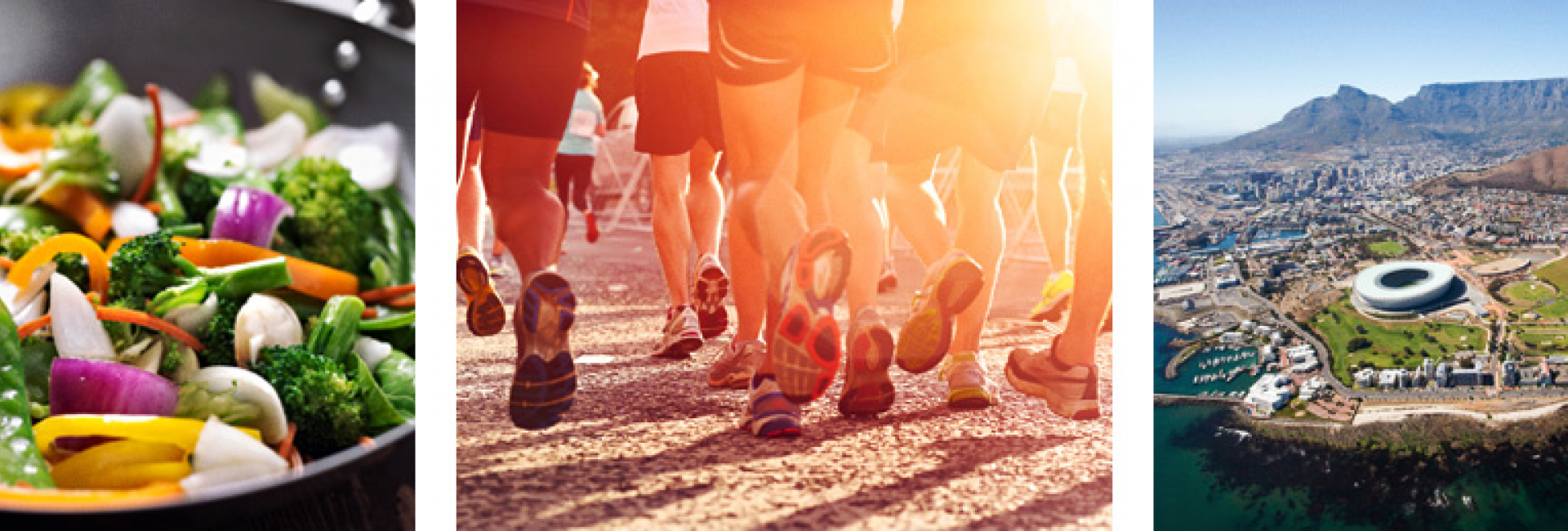
Billed as ‘the world’s most beautiful marathon’, the Old Mutual Two Oceans Marathon was first held in 1970 with only 26 runners. This year the race falls on 4 April, the Saturday of Easter weekend and sees close on 26,000 participants run a selection of distances – the scenic 56km ultra marathon, the 21km half marathon or the shorter fun runs.
While it might be the most picturesque of all races, it remains a gruelling event and the ultimate test in endurance and fitness. Part of preparing for the marathon is providing the right fuel for your body in the lead up to and the days immediately preceding the event, and for the best advice on what one should or should not be eating, we turn to Runner’s World – the world’s leading authority on all things run-related.
Their advice in the weeks leading up to any race is to include 15 particular foods in your diet – taken from ‘The Best Foods for Runners’, it includes amongst others carbohydrates such as sweet potato and whole grain pasta; healthy sources of protein such as eggs, fish and chicken; plus surprisingly frozen stir-fry vegetables as ‘research shows that eating a combination of antioxidants, such as beta-carotene and vitamin C [typically found in most ready-to-use stir-fry mixes], may lessen muscle soreness after hard interval workouts by reducing the inflammation caused by free-radical damage.’
The golden rule for the days immediately preceding the race is to not try anything new. In ‘What Do I Eat Before My Race?’ author, Susan Paul (an exercise physiologist), writes ‘nothing new, only tried and true!’ She advises including lean protein and some carbohydrate at every meal; avoiding processed foods as well as those high in fat – healthy and fresh foods should always be your first choice. She suggests eating your largest meal (if you plan on carbo-loading) two nights before the race – not the night before – because potential anxiety about the race can compromise the digestion process leaving you uncomfortable at the starting line. Your pre-race breakfast should be eaten two to three hours prior to the start of the marathon and should be something light, for example toast with peanut butter along with water, coffee or a sports drink – you should keep sipping water until half an hour before the race so that you still have time for a bathroom break before the main event.
During the race Runner’s World recommends consuming a combination of hydration and fuel, but again, whatever has worked for you in the past, now is not the time to shake things up – choose from energy bars, gels and chews; caffeinated carbs and sports drinks.
Whether you’re a beginner or a seasoned runner we wish you the best of luck, and from all of us at N1 to all of you out there, we wish you a blessed Easter weekend – travel safe, relax and enjoy.