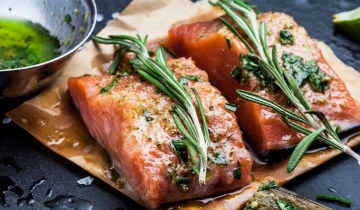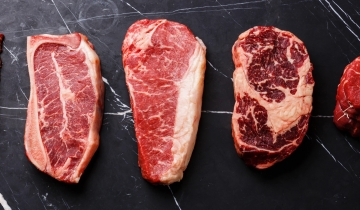
Johannesburg and Cape Town meat wholesalers, N1, may primarily trade in delivering high-quality Halaal and Non-Halaal meat products, but another of their very popular product ranges centre around Halaal fish. As we all know, fish quotas around the world are in danger, not only from overfishing, but also from climate change; and one such issue affecting stock is ocean acidification.
Helping to highlight what that means and why we should care is the National Resources Defense Council (NRDC). Begun in 1970 by a handful of young attorneys intent on protecting America’s air, land and water from pollution and corporate greed; and today supported by nearly 500 attorneys, scientists and other experts; the NRDC’s mission is to safeguard our planet and the natural system on which all life depends.
According to NRDC scientist, Lisa Suatoni, carbon pollution is not just warming the climate, but it’s also making our oceans more acidic. This has a knock-on effect not only for all sea life, but also the global seafood industry which relies on Halaal fish and other seafood for its concomitant success. Our seas absorb nearly 25% of the carbon dioxide we produce by burning fossil fuel every year, and that absorption is changing the inherent nature of its inhabitants. Particularly hard hit are creatures like molluscs, crabs and corals, because the acidic water makes it harder for them to grow their shells, which in turn makes them weaker and less able to survive the changes happening in our oceans. But those without a shell are threatened too; studies show that a higher level of acidity in the water makes it harder for clownfish to sense predators, and for sharks to hunt their prey. These changes may seem slight when considered in isolation, but when considered as part of nature’s jigsaw puzzle that makes up our food chain, the effects are startling.
The answer of course is to reduce carbon pollution. Members of the InterAcademy Panel, a global network consisting of over 106 national science academies, in their IAP Statement on Ocean Acidification, called on world leaders to “acknowledge that ocean acidification is a direct and real consequence of increasing atmospheric CO2 concentrations, is already having an effect at current concentrations, and is likely to cause grave harm to important marine ecosystems; [to] recognise that reducing the build-up of CO2 in the atmosphere is the only practicable solution to mitigating ocean acidification; [and to] reinvigorate action to reduce stressors, such as overfishing and pollution, on marine ecosystems to increase resilience to ocean acidification.”
Where nearly one in ten people around the world rely on fishing or fishing-related tasks for their survival, more needs to be done locally and globally to protect our seas – and that includes choosing suppliers that support sustainable fishing practises. So, for the best in ethical business practises and high-quality Halaal meat and Halaal fish products, choose Johannesburg and Cape Town meat wholesalers, N1 – your leading wholesale meat supplier