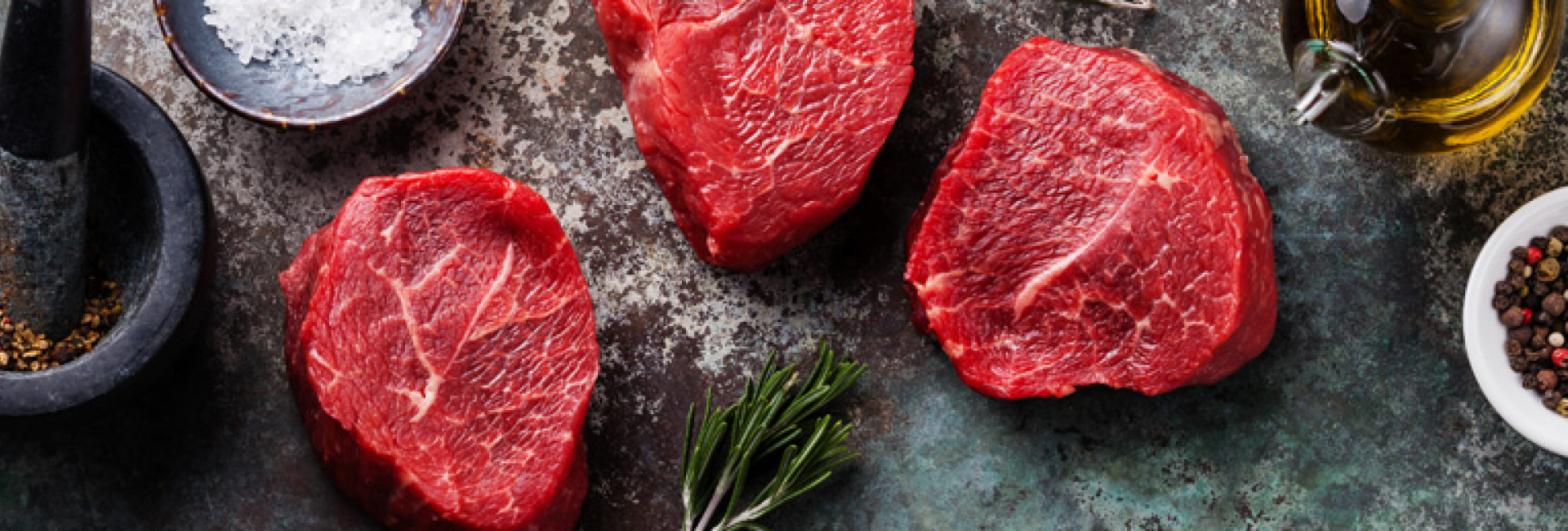
Ever wondered exactly what marbling is and why it makes red meat so tasty? Well here’s a little marbling 101 for those not fully in the know. Marbling is the fine, white streaks of fat found in a cut of meat – more specifically, high amounts of intramuscular fat which gives it a marble-like appearance, hence ‘marbling’.
High quality meat will typically carry a lot of marbling evenly disturbed throughout the cut, while a leaner cut of meat will have less. Highly marbled meat mostly comes from the loin area of the animal, an area where muscles are less hard working and where higher deposits of fat are found.
There are a number of factors influencing marbling. Selective breeding is one such factor: certain cattle breeds are known to have higher marbling scores, namely Angus and Wagyu, and certain dairy breeds such as Jersey and Holstein-Friesian. The other factor to influence marbling is feed: time on feed, type of feed and value of feed. Feeding corn and barley are also known to change the colour of the fat from slightly yellow to white – the preferred colour.
According to Cookthink, an innovate cooking website, marbling tenderises meat in two ways: ‘First it stretches the connective tissue into thin sheets, making it more likely to soften during cooking. [Secondly and] more importantly, it isolates one muscle fibre from another, helping them to separate into tiny easily chewed packets.’ It’s not just more tender, but the high degree of fat makes it tastier too; as the meat cooks, the fat melts which is what keeps the meat moist, and it also imparts that delicious and succulent flavour.
If your mouth is watering right about now, you’re not alone – very little beats the taste of a prime steak grilled to juicy perfection. So be sure to call N1, South Africa’s leading meat wholesalers, to place your order today.