

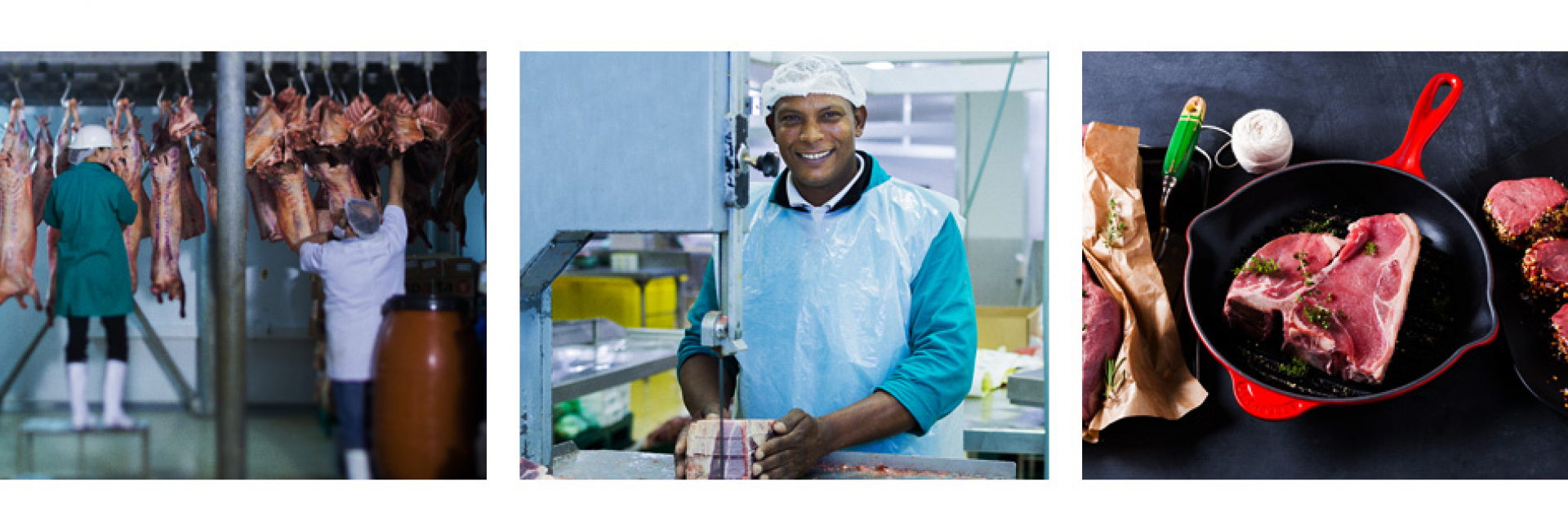
Hazard Analysis and Critical Control Points, or HACCP as it is more commonly known, is a system which identifies, evaluates and controls hazards which are significant for food safety. It is an integral part of ensuring that all food end-products are of the highest quality, and it forms the cornerstone of the N1 Hygiene Code of Conduct.
The highly-qualified managers that oversee the establishment, implementation, maintenance and improvement of the HACCP system at N1 are Steven Pfeifer in the Johannesburg office; and Marius Schneider, assisted by Nomhle Sithole, in the Cape Town office. Together they make sure that the principles of HACCP are correctly evaluated and stringently applied, to ensure that you get the safest final Halaal and Non-Halaal product (please link to Products page) possible.
As HACCP is such an essential element in food safety, we will address its importance in three parts: how it evolved; the seven principles that underpin its application; and how it is certified. (as each blog is uploaded, please be sure to go back and hyperlink internally to each part) HACCP first began in the early 1960s as a collaborative effort between NASA and the Pillsbury Company. Its objective was to ensure the safety of food used during space travel; but scientists found that by testing the final end-product, insufficient food remained for actual eating; and so they looked towards NASA’s own Critical Control Points (CCP) in engineering management, for guidance. The team were asked to identify ‘critical failure areas’ and then remove them from the process. The Pillsbury lead scientist was so impressed with the system that he encouraged Pillsbury to adopt it internally. A few years later in 1969, Pillsbury facilitated a training programme for the American Food and Drug Administration (FDA) titled ‘Food Safety through the Hazard Analysis and Critical Control Point System’ and this became the precursor of today’s HACCP.
Over the years, HACCP has become the globally accepted method for ensuring food safety, and its guidelines have been adopted by the Codex Alimentarius Commission – a commission established by the FAO and the WHO to “develop international food standards, guidelines and codes of practice to protect the health of the consumers and ensure fair practices in the food trade”.
In ‘N1 Restaurant Suppliers Best Practices Part 2 – HACCP Principles’, we will look at what these principles are and how N1 strive to constantly deliver a high-quality product that meets the highest standards. In the interim, if you have any comments or questions, be sure to call or send us a mail - we’d love to hear from you.